

The DRIZZLE interceptor drone is a new autonomous effector family unveiled by Indra to counter mass drone attacks. The system is designed to intercept hostile unmanned aerial vehicles, with the manufacturer outlining its intended capabilities and operational role.
Spanish technology group Indra has unveiled DRIZZLE, a new family of autonomous interceptor systems designed to help counter unmanned aircraft. The company introduced the system at UNVEX, a major unmanned-systems event held in Spain, presenting it as an option for protecting infrastructure, vehicles and deployed units against drone threats.
Indra says the compact interceptor can exceed 400 kilometres per hour and has an approximate range of 80 kilometres. The company says that range can be extended to 130 kilometres when the interceptor is carried by a larger “mothership” drone. These are manufacturer-reported specifications; independent operational testing and deployment details were not included in the announcement.
What Indra has announced
DRIZZLE is described by Indra as a family of autonomous effectors intended for integration into broader counter-unmanned aircraft systems, commonly known as counter-UAS. Rather than presenting it as a standalone answer to every aerial threat, the company says the system is designed to complement solutions used to detect, track and respond to hostile or unauthorised drones.
According to Indra, the system includes target-tracking and selection capabilities, along with navigation designed for environments in which multiple aircraft or other objects may be present. The announcement does not provide detailed information about the sensors, software architecture or exact operating conditions, so the practical performance of these functions remains to be assessed.
Speed and range are central to the design
The company’s stated speed of more than 400 km/h places DRIZZLE in a different performance category from many small consumer and commercial multirotor drones. However, speed alone does not determine whether an interceptor can engage a particular target. Detection, identification, communications, flight endurance, weather, airspace restrictions and the behaviour of the target all influence how a counter-drone system performs.
Indra gives the interceptor an approximate range of 80 kilometres, with the possibility of reaching 130 kilometres when supported by a mothership aircraft. The company has not specified in its public announcement how the range figures were measured, what payload or flight profile was assumed, or whether the extended-range configuration has completed operational trials. The figures should therefore be treated as published specifications rather than independently confirmed results.

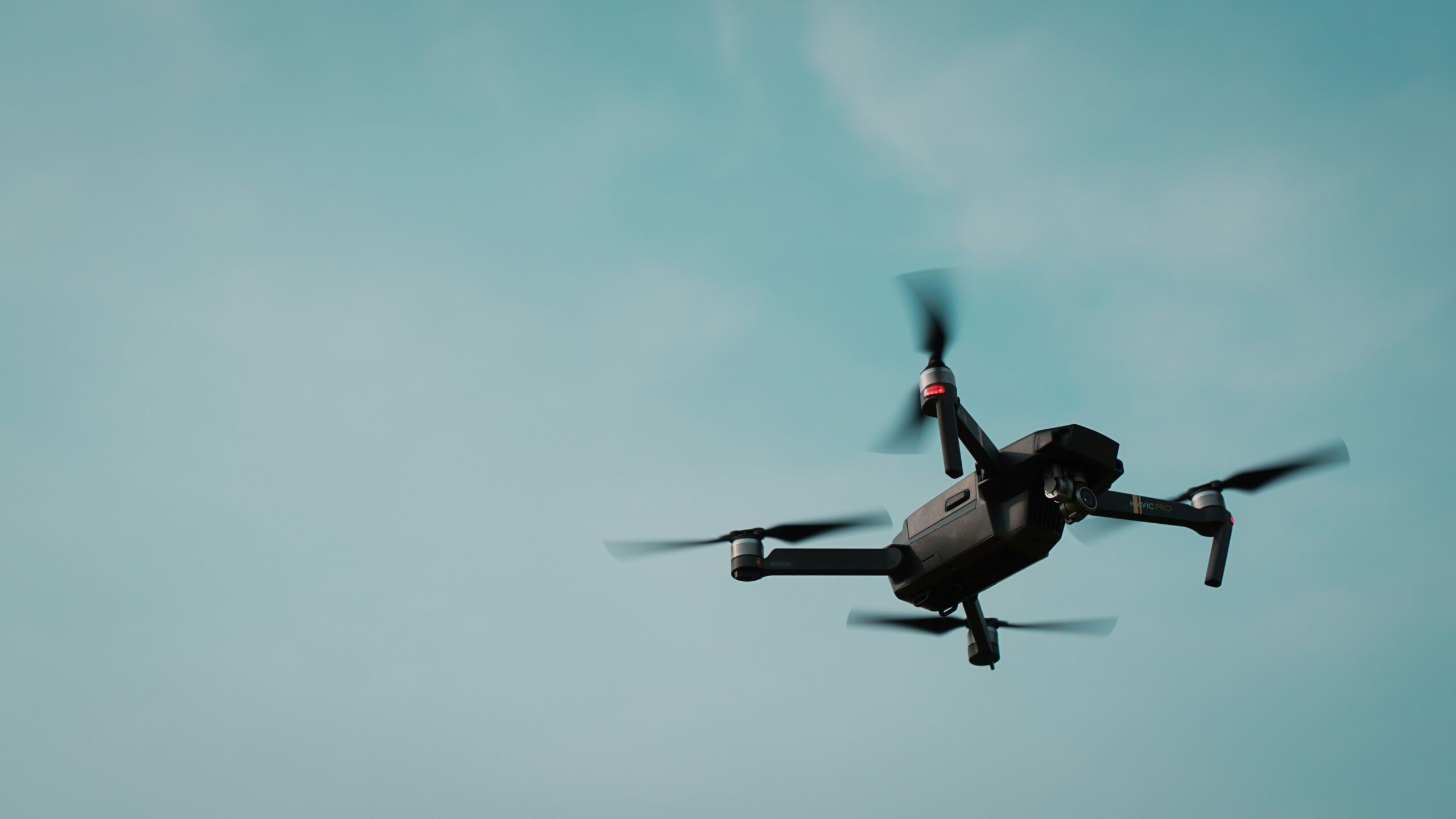
Why the mothership concept matters
Using a larger aircraft to carry a smaller interceptor is one way to separate the deployment platform from the vehicle intended to perform the final part of a mission. In principle, a carrier aircraft can transport a smaller system closer to an area of interest, potentially extending its reach beyond what it could achieve when launched from the ground.
That approach also introduces integration questions. A practical system needs reliable communication between platforms, safe release procedures, coordination with other aircraft and a clear way to manage the interceptor if conditions change. Indra’s announcement describes the mothership option, but does not publish enough detail to establish how these elements are implemented or validated.
Part of a wider counter-drone toolkit
Counter-UAS systems generally combine several functions. Sensors may detect an aircraft, software or operators may assess what it is, and a response system may then attempt to mitigate the threat. Different approaches can include electronic measures, directed energy, physical interception or other methods, depending on the situation and applicable rules.
DRIZZLE is positioned as an interceptor within that broader landscape. Its role is distinct from detection equipment such as radar or radio-frequency monitoring. DroneUnzip has previously covered an integrated RF and radar solution for airspace security, illustrating how detection and response technologies can form different parts of a layered system.
No single approach is suitable for every setting. Protecting a fixed facility, a moving convoy and an aircraft may involve different detection ranges, response times, safety considerations and legal requirements. The usefulness of an interceptor depends not only on its own performance, but also on how it fits into the wider command-and-control system.
What remains unknown
Indra’s announcement is an introduction to the DRIZZLE family, not a full technical evaluation. Publicly available information in the announcement does not establish the system’s unit cost, production schedule, customer commitments, service history or performance in operational conditions. It also does not provide a detailed account of how the system handles false alarms, crowded airspace or situations in which interception could create risks for people and property.
Those details matter when organisations evaluate counter-drone equipment. Procurement decisions typically involve more than headline speed or range: buyers also need evidence about reliability, maintainability, training, interoperability, lifecycle costs and compliance with local aviation and safety requirements.
What the announcement signals
DRIZZLE adds another product to the growing range of technologies being developed to address the spread of unmanned aircraft. Indra is presenting the family as a way to add an interception capability to wider counter-UAS solutions, with a compact design and an optional carrier-drone arrangement.
The next milestones to watch are further technical disclosures, demonstrations, independent evaluation and any confirmed customer or deployment announcements. Until those details emerge, the specifications published by Indra offer an initial picture of the system, but not a complete measure of its real-world effectiveness.
Source: Indra Group’s announcement, “Indra unveils DRIZZLE, its new family of autonomous effectors to counter mass drone attacks,” published 17 September 2026. The technical figures in this article are attributed to the company. Read the company announcement.