
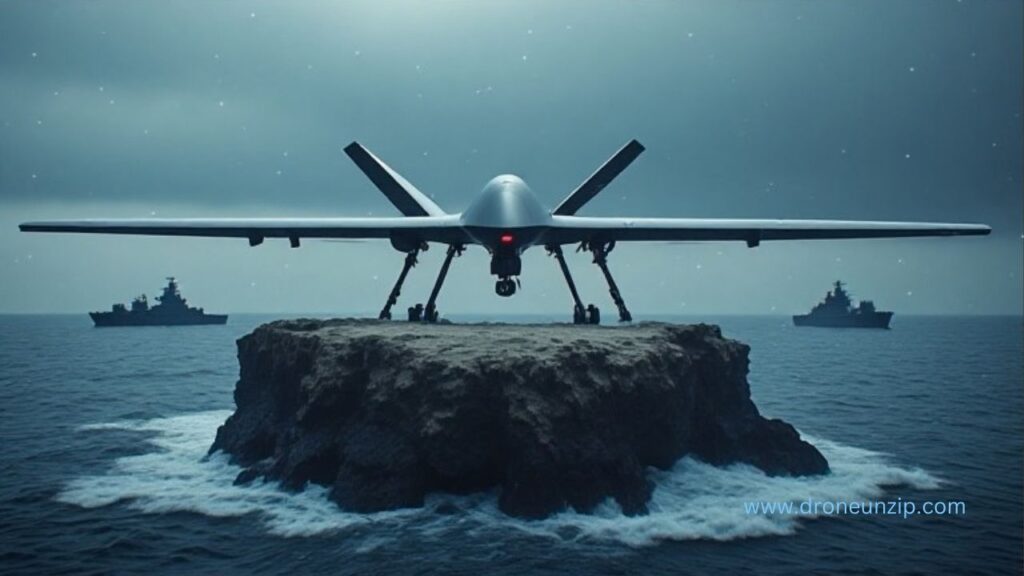
China has publicly showcased a Guizhou WZ-7 Soaring Dragon high-altitude, long-endurance unmanned aircraft at Scarborough Shoal for the first time, according to a September 28 report by the U.S. Naval Institute’s USNI News. The appearance came during Chinese military and coast guard exercises around the disputed South China Sea feature.
The development matters beyond the individual aircraft. It points to a growing role for long-endurance unmanned systems in maritime surveillance, where persistent aerial coverage can complement warships, aircraft and other sensors across contested waters.
WZ-7 appears during Scarborough Shoal drills
USNI News reported that the People’s Liberation Army Southern Theater Command and China Coast Guard conducted consecutive exercises within and around Scarborough Shoal on September 27. Chinese forces also released imagery showing the WZ-7 operating over the feature.
The report said other unmanned aircraft, including the CAIG Wing Loong II, were also used during the training activities. A Shaanxi KJ-500H airborne early-warning and command aircraft was highlighted in related imagery, while Type 054A and Type 056A warships and a Type 908 replenishment vessel participated in the drills.
USNI News identified the WZ-7 as the notable new element because this was the first publicly revealed deployment of the type at Scarborough Shoal. The aircraft is designed for long-endurance intelligence, surveillance and reconnaissance missions, making it particularly relevant to wide-area maritime monitoring.
Why the drone matters in the South China Sea
A long-endurance unmanned aircraft can remain airborne for extended periods while collecting surveillance information over a large operating area. That creates a persistent layer between space-based systems, crewed aircraft, surface ships and smaller tactical drones.
At a location such as Scarborough Shoal, persistence is especially valuable. Ships and crewed aircraft have operating limits, while a high-altitude UAV can provide another means of maintaining awareness of vessel movements and activity around a contested maritime feature.
The WZ-7’s appearance therefore should not be viewed simply as another drone photograph. It demonstrates how China is integrating unmanned aircraft into a broader maritime surveillance architecture.
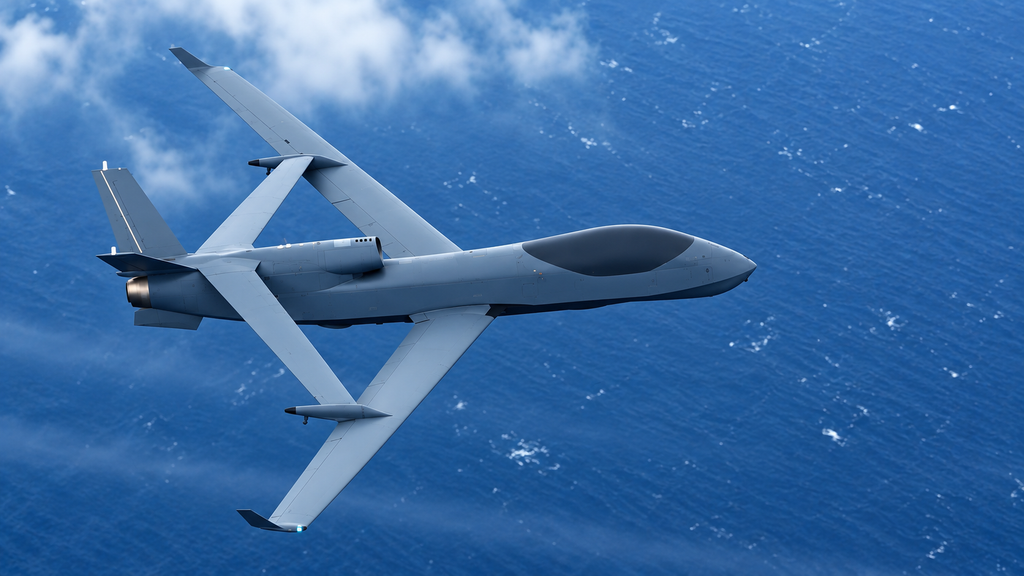
India is part of the wider regional picture
The development is also relevant to India because the September exercises occurred shortly after a Philippine-led ASEAN Defence Ministers’ Meeting-Plus maritime security exercise involving 11 vessels from eight countries, including India, the United States, Japan, Australia and Singapore.
India’s participation does not mean the country was directly involved in the WZ-7 activity. However, the broader operating environment matters for India’s naval and unmanned-systems planners as the Indo-Pacific becomes increasingly dependent on persistent surveillance and autonomous platforms.
India is simultaneously expanding its own unmanned capabilities, including counter-UAS systems and indigenous platforms. The country’s recent focus on domestic drone manufacturing and military experimentation makes developments in neighbouring maritime theatres increasingly relevant to future requirements.
What remains unconfirmed
The WZ-7 deployment should be understood through the evidence currently available. USNI News based its report on released imagery and reporting from Chinese state media. Claims by Beijing about the extent of its control around Scarborough Shoal are contested and should not be treated as established changes to the legal status of the feature.
The available reporting also does not establish every operational detail of the WZ-7 mission, including its precise flight profile, sensors used during the exercise or the intelligence collected. Those details would require additional official documentation or independent confirmation.
What is clear is that China has publicly shown the WZ-7 operating from the Scarborough Shoal area, adding a high-endurance unmanned surveillance capability to an already substantial mix of ships, aircraft and drones operating around one of the South China Sea’s most closely watched flashpoints.
Why this matters for the drone industry
The development illustrates the direction of military drone operations: increasingly, the value of an unmanned aircraft comes not only from its airframe but from how it connects to a wider network of sensors, command systems and other platforms.
For India and other Indo-Pacific countries, the lesson is significant. Persistent unmanned surveillance is becoming a core component of maritime awareness, and the ability to operate such systems alongside crewed aircraft, ships and smaller drones could become an increasingly important capability.
Source: USNI News. Reporting on China’s maritime claims is attributed to the relevant Chinese state-media sources cited by USNI News.