

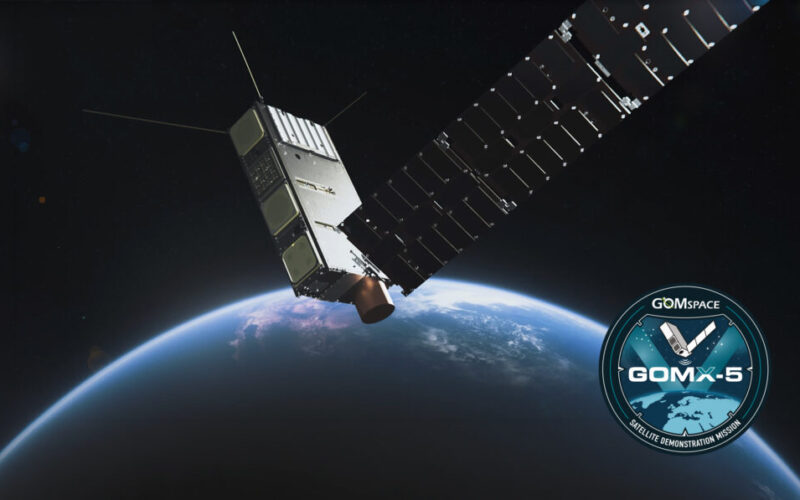
An ESA-supported CubeSat launched on 1 October is testing whether a small satellite can prepare its electric propulsion system for potential collision-avoidance manoeuvres much faster than traditional commissioning procedures.
GOMX-5, developed with Danish company GomSpace, flew aboard SpaceX’s Transporter-18 rideshare mission. The European Space Agency says the technology-demonstration mission is intended to validate several technologies and operational concepts in orbit.
A 48-hour commissioning target
A central objective is to commission the satellite’s electric propulsion system within 48 hours of launch. That could shorten the time between deployment and the point at which a spacecraft is ready to perform orbital manoeuvres, including collision avoidance when required.
In its 2 October mission update, ESA described the process as largely automated and said the operations team was awaiting confirmation that the procedure had succeeded and that the spacecraft was healthy enough for final checks. The 48-hour figure should therefore be treated as a mission objective, not a verified achievement unless a subsequent update confirms it.
More than propulsion
GOMX-5 also carries a maritime-awareness payload built around multiple antennas and radios. It is intended to detect signals across a broad frequency range from ships, offshore platforms and other maritime assets, demonstrating technology that could support future monitoring constellations.
The satellite also includes a tracking solar panel and onboard computing technologies. ESA describes GOMX-5 as a technology demonstrator, rather than an operational maritime-monitoring service in its own right.
Why it matters
As more satellites enter orbit, collision-risk management and responsible end-of-life operations are becoming increasingly important. Automating early commissioning could reduce the time and operational effort needed to make a spacecraft ready for manoeuvres.
The maritime payload points to a second opportunity: small satellites can test sensing and radio-frequency techniques that may later be deployed across larger constellations. A single satellite cannot provide continuous global coverage, but it can generate flight heritage and performance data for future systems.
What to watch next
- ESA or GomSpace confirmation of the propulsion system’s commissioning timeline.
- Evidence that the propulsion subsystem can perform its intended orbital manoeuvres.
- Results from the maritime-awareness payload and its ability to detect relevant signals in orbit.
- Whether the technologies are adopted in future small-satellite platforms or constellations.
GOMX-5 is a useful test of how autonomy can improve spacecraft operations, but the key measure will be demonstrated in-orbit performance rather than launch success alone.
Sources
- European Space Agency: GOMX-5 successfully launched European Space Agency: GOMX-5 integration and mission objectives
Editorial note: The 48-hour commissioning target is presented as an objective; no success claim should be made without an updated official confirmation.
