

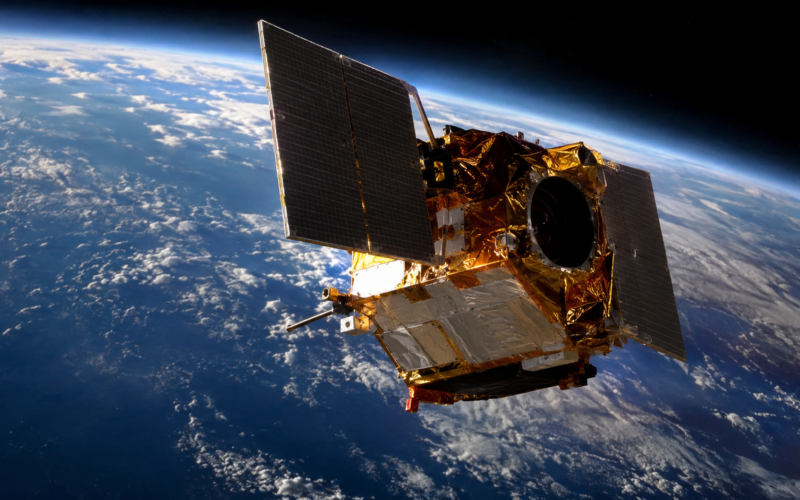
NASA’s Neil Gehrels Swift Observatory was expected to re-enter Earth’s atmosphere on November 4, 2026, after an attempt to raise its orbit using a commercial robotic servicing spacecraft failed to achieve its primary objective.
Katalyst Space Technologies’ LINK spacecraft experienced attitude-control problems after its July launch. NASA said in August that the vehicle would not capture and boost Swift as planned, although it might still collect data from rendezvous and proximity operations.
Key Takeaways
- Swift was approaching atmospheric re-entry after more than two decades in orbit.
- The LINK rescue spacecraft launched in July but developed attitude-control problems.
- NASA cancelled the planned capture-and-boost operation in August.
- The precise re-entry time and final outcome require confirmation from updated tracking reports.
Who Was Behind the Swift Rescue Mission?
NASA contracted Katalyst Space Technologies to attempt a rapid mission to extend the life of the Swift telescope. Launched in 2004, Swift has studied gamma-ray bursts and other transient phenomena well beyond its original two-year prime mission.
What Went Wrong With LINK?
LINK launched on July 3 aboard a Northrop Grumman Pegasus XL rocket. NASA said teams established communications and began checkouts before an attitude-control issue prevented the planned robotic capture and orbital boost. NASA subsequently assessed whether the spacecraft could still gather useful proximity-operation data.
When and Where Did the Mission Unfold?
NASA announced the revised mission plan in August. Reuters reported on November 4 that Swift was approaching atmospheric re-entry from low Earth orbit. This draft does not claim re-entry has already been confirmed.
Why Does the Attempt Matter for Space Robotics?
Autonomous rendezvous and robotic capture require stable spacecraft control and precise relative navigation. LINK’s difficulty illustrates how demanding servicing missions can be, even when the underlying purpose is to extend the useful life of an existing spacecraft.
What Happens Next?
Updated tracking data and a technical account of the LINK anomaly will help clarify the outcome and its implications for future satellite-servicing efforts. The failed boost does not, by itself, establish that every experimental objective failed.
