

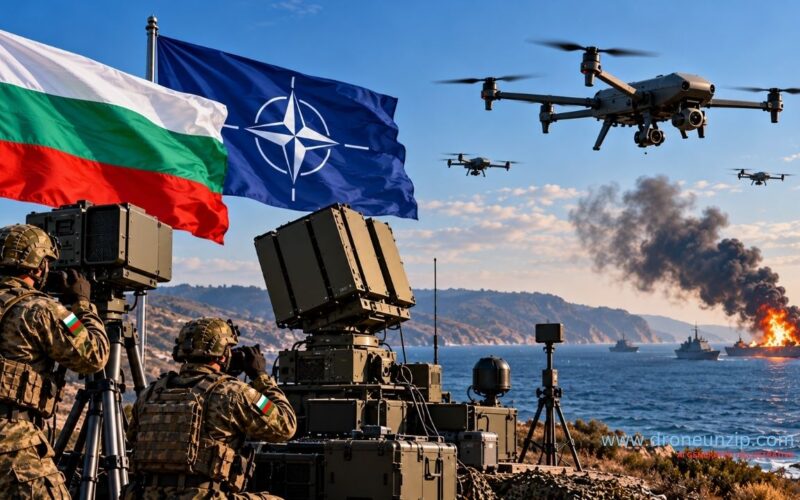
Bulgaria has asked NATO for anti-drone systems and combat-aircraft support after a series of drone attacks on commercial shipping in the Black Sea heightened concern about security near the alliance’s southeastern flank. The request comes amid investigations into attacks on vessels in and near Bulgaria’s exclusive economic zone.
Key Takeaways
- Bulgaria has requested NATO support that includes anti-drone systems, according to Reuters.
- The Bulgarian government has separately confirmed that it asked the EU and NATO for technical assistance investigating attacks on two commercial ships in its exclusive economic zone.
- Authorities have not publicly established the origin of the drones from recovered physical evidence; responsibility for individual attacks should not be treated as proven.
Who Is Involved?
The request involves the Bulgarian government and NATO. Reuters reported that Bulgaria’s defence minister said Sofia had formally asked the alliance for combat aircraft and anti-drone systems. Bulgaria has also sought technical help from the EU and NATO to investigate attacks on commercial vessels.
What Happened?
The request follows drone attacks on commercial shipping in the Black Sea. In a statement dated 12 October, Bulgaria’s Council of Ministers said the country had requested technical assistance from the EU and NATO to continue investigating attacks on two commercial vessels in Bulgaria’s exclusive economic zone. The government said investigators had not recovered drone debris that would allow them to establish the systems’ origin.
Reuters reported on 16 October that Bulgaria had asked NATO to deploy combat aircraft and anti-drone systems. These are distinct forms of support: aircraft can contribute to air policing and deterrence, while counter-drone systems may help detect, track or defeat unmanned threats, depending on the equipment supplied.
When and Where?
The official Bulgarian statement was published on 12 October 2026. Reuters reported the NATO request on 16 October. The incidents under investigation occurred in the Black Sea, including waters within Bulgaria’s exclusive economic zone.
Why Does It Matter?
The episode highlights how drone warfare can threaten civilian shipping beyond the immediate front line. For NATO’s Black Sea members, the challenge includes maritime surveillance, identifying the origin of attacks and choosing countermeasures that are effective without escalating risk to commercial vessels and crews.
The evidence remains incomplete. Bulgaria has sought help with the investigation, and the government’s statement says recovered debris was not available to establish the drones’ origin. Attribution should therefore remain qualified unless investigators release additional evidence.
What Happens Next?
The key questions are what assistance NATO agrees to provide, whether regional coordination with Romania and Turkey expands, and whether investigators recover evidence that can identify the drones or the parties responsible. No specific NATO deployment outcome is confirmed in the sources cited here.
Sources
