
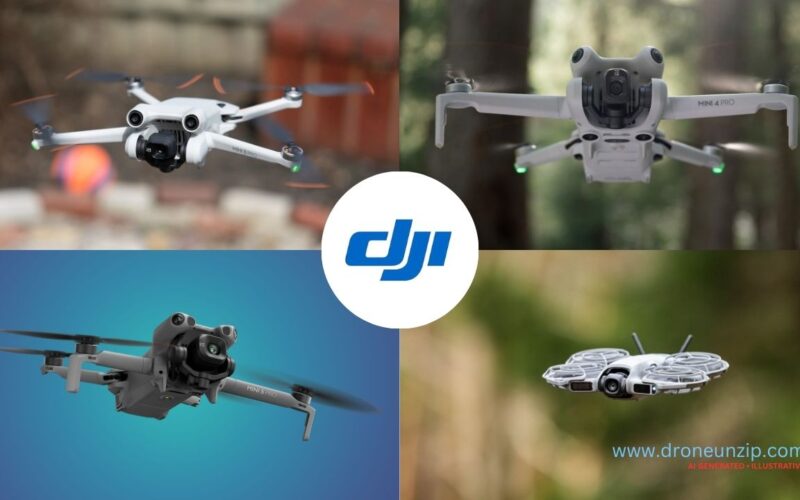
Choosing a DJI Mini drone is no longer just a question of buying the smallest camera aircraft. The DJI Mini 3 targets buyers who want a compact, stabilised camera drone without paying for every advanced feature. The DJI Mini 4 Pro adds more capable obstacle sensing and creator-focused flight features, while the DJI Mini 5 Pro moves further upmarket with a larger camera sensor and more advanced sensing. The DJI Neo 2 belongs in the conversation for a different reason: it is a palm-sized, subject-focused drone rather than a direct substitute for a conventional Mini camera drone.
This is a specification- and listing-based comparison, not a hands-on flight test. Manufacturer figures are quoted under defined test conditions and do not guarantee the same results outdoors. Indian prices and stock can change quickly, and the seller listings below are examples rather than official DJI India prices.
Quick verdict: which DJI compact drone fits you?
| Model | Best fit | Main reason to choose it | Main trade-off |
|---|---|---|---|
| DJI Mini 3 | Travel, casual photography and first serious camera drone | Three-axis gimbal, 4K video and a comparatively lower price | Basic sensing; fewer advanced flight-safety features |
| DJI Mini 4 Pro | Creators who want stronger automated flight and obstacle sensing | Omnidirectional obstacle sensing and advanced video modes | Costs materially more than the Mini 3 |
| DJI Mini 5 Pro | Creators who value image quality, low-light capability and newer tracking features | 1-inch-type CMOS sensor, 50MP stills and omnidirectional sensing supported by forward LiDAR | Premium price; check exact battery and weight configuration |
| DJI Neo 2 | Self-filming, quick social clips and simple subject-oriented shots | Small body, propeller guards and hands-free capture options | Not a like-for-like replacement for a three-axis-gimbal Mini camera drone |
DJI Mini 3 vs Mini 4 Pro vs Mini 5 Pro: key specifications
The table focuses on differences that affect a buying decision. Check the linked manufacturer specification pages for exact recording modes, supported accessories and regional variations before ordering.
| Specification | DJI Mini 3 | DJI Mini 4 Pro | DJI Mini 5 Pro |
|---|---|---|---|
| Main camera sensor | 1/1.3-inch CMOS | 1/1.3-inch CMOS | 1-inch CMOS |
| Still-photo resolution | Up to 48MP mode | Up to 48MP mode | Up to 50MP |
| Video headline | 4K up to 30fps | 4K HDR, high-frame-rate modes up to 100fps in supported settings | 4K up to 120fps in supported slow-motion settings |
| Gimbal | Three-axis mechanical | Three-axis mechanical | Three-axis mechanical with 225° rotation capability |
| Obstacle sensing | Downward vision sensing | Omnidirectional vision sensing | Omnidirectional vision sensing, forward-facing LiDAR and downward infrared sensing |
| Maximum advertised flight time | Up to 38 min standard battery; up to 51 min with Battery Plus | Up to 34 min standard battery; longer with compatible Battery Plus | Up to 36 min standard battery; up to 52 min with Battery Plus |
| Weight consideration | Approximately 248g with standard battery; Battery Plus changes the weight | Standard configuration under 249g; Battery Plus changes the weight | Check the exact aircraft and battery configuration in the official specifications and local rules |
Important: the flight-time figures above are manufacturer maximums under test conditions, not typical guaranteed recording time. Wind, temperature, battery age, manoeuvres and the reserve needed to land safely all reduce usable airtime. For the Mini 4 Pro and Mini 5 Pro, do not assume every battery bundle has the same weight or regulatory implications.
1. DJI Mini 3: the value-focused camera drone
The Mini 3 remains worth considering if your priority is capturing travel scenes, family trips, landscapes or straightforward social video. Its 1/1.3-inch sensor, 4K recording and three-axis mechanical gimbal provide a more capable imaging setup than a basic toy or selfie drone. Its camera can also rotate for vertical content, which is useful for creators who publish primarily to mobile-first platforms.
The compromise is sensing and automation. The Mini 3 has downward vision sensing rather than the more comprehensive obstacle-sensing systems on the Mini 4 Pro and Mini 5 Pro. A pilot should not treat it as an aircraft that will reliably detect and avoid trees, wires or other hazards. It is a better fit for someone willing to fly deliberately and leave space around the aircraft.
For the model-specific breakdown, see our DJI Mini 3 specifications and India buying guide. That article is also the right place to compare the exact controller bundle and retailer listing before you buy.
2. DJI Mini 4 Pro: the balanced upgrade for creators
The Mini 4 Pro’s strongest reason to exist is not simply a higher model number. It adds omnidirectional obstacle sensing and more advanced automated flight and video capabilities around a 1/1.3-inch camera sensor. Those features can be valuable when framing a moving subject or working in a location where the aircraft’s surroundings are changing, although sensing still depends on lighting, surface texture, speed and the environment.
For a creator who regularly films people, vehicles or travel sequences, those tools may justify the price premium over the Mini 3. For someone who mainly takes slow landscape shots in open areas, the extra features may deliver less practical value. Compare the total package, including controller, spare batteries, charging hub and filters, rather than comparing aircraft-only prices with Fly More bundles.
3. DJI Mini 5 Pro: the image-quality and feature upgrade
The Mini 5 Pro’s headline imaging change is its 1-inch CMOS sensor with up to 50MP stills. It also lists omnidirectional binocular vision sensing, forward-facing LiDAR, a downward infrared sensor and a gimbal capable of 225° rotation. Those are meaningful hardware differences for creators who care about image flexibility, more demanding tracking and shooting in conditions where sensing capability matters.
DJI advertises up to 36 minutes with the standard battery and up to 52 minutes with the Battery Plus. The manufacturer’s own test notes also publish lower typical-flight figures for a breezy 4K recording scenario, a useful reminder that maximum endurance is not the same as a normal filming session. Check the exact battery included in any Indian listing, because a higher-capacity battery can change take-off weight.
The Mini 5 Pro is the model to investigate if the Mini 3’s camera or the Mini 4 Pro’s sensor is the limiting factor in your work. It is harder to justify if you only fly occasionally or do not use the advanced camera and sensing features. Confirm local availability, the seller’s warranty, GST invoice and repair route before committing to a premium imported product.
4. What about DJI Neo 2?
The Neo 2 is worth mentioning, but it should not be treated as a direct Mini 3 alternative on camera design alone. DJI lists a 1/2-inch sensor, 4K video modes, a single-axis mechanical tilt gimbal supported by electronic stabilisation, propeller guards and subject-oriented capture features. DJI’s published maximum flight time is approximately 19 minutes, or about 17 minutes with propeller guards, under its stated test conditions.
That design makes the Neo 2 attractive for quick self-filming and social clips where compactness, guarded propellers and simple control matter. A conventional Mini-series aircraft is generally the more natural starting point for planned aerial photography, landscape work and controlled camera movements. Choose the Neo 2 for its distinct workflow, not because its name or small size makes it a cheaper equivalent to a Mini 5 Pro.
Indicative prices in India: compare the same bundle
Indian reseller listings reviewed for this comparison showed the Mini 3 Fly More Combo with controller around ₹74,499–₹84,999, the Mini 4 Pro in the broad region of ₹91,999 for an aircraft-only/standard listing to around ₹1,04,999 for a Fly More Combo, the Mini 5 Pro Fly More Combo around ₹1.39 lakh before GST on one listing, and the Neo 2 Fly More Combo around ₹56,499 on one listing. These are examples from individual seller pages, not official DJI India retail prices, and the packages and tax treatment are not directly equivalent.
Before paying, open the exact product page and confirm stock, controller model, number and type of batteries, whether the listed price includes GST, invoice details, warranty provider and return terms. Some sellers quote pre-GST prices or show different prices for aircraft-only, standard and Fly More bundles. A low headline price is not useful if it excludes tax or does not include the controller you need.
Price examples checked from Fly High Innovations, Everse and XBoom. Recheck each listing immediately before publication or purchase because stock and prices can change.
Which model should you buy?
- Choose the Mini 3 if you want a capable compact camera drone and the lower price matters more than advanced obstacle sensing.
- Choose the Mini 4 Pro if you want a stronger mix of creator features, automated flight modes and omnidirectional obstacle sensing without moving to the Mini 5 Pro’s newer camera system.
- Choose the Mini 5 Pro if its 1-inch sensor, newer sensing system and gimbal flexibility solve a real need in your photography or video work.
- Consider the Neo 2 if your main goal is easy self-filming and social clips rather than a conventional aerial camera-drone workflow.
India-specific checks before buying or flying
Do not assume that a drone is legal to fly everywhere simply because its advertised weight is below 250g. Check the current Ministry of Civil Aviation Drone Rules, current DGCA guidance and the Digital Sky airspace information for the intended location. Requirements can depend on aircraft category, purpose, airspace and the applicable current rules.
For an imported drone, also verify the seller’s legal supply route and documentation, exact regional version, warranty coverage, repair arrangements and availability of replacement batteries and propellers. A manufacturer’s global product page confirms specifications, not necessarily local stock, local support or the suitability of a particular import for your use.
For broader context, see our DJI drone buying guide for India, drone camera guide and drone price guide.
FAQs
Is the DJI Mini 5 Pro better than the Mini 4 Pro?
On paper, the Mini 5 Pro adds a larger 1-inch sensor, 50MP stills, a more flexible gimbal and sensing that includes forward-facing LiDAR. Whether it is better value depends on the price difference and whether you will use those features.
Is the DJI Mini 3 still worth buying?
It can be, if its lower price and core camera capabilities meet your needs. The main reason to pay more for a newer model is to gain features you will actually use, particularly obstacle sensing, advanced tracking or camera improvements.
Does a sub-250g drone mean I can fly anywhere in India?
No. Weight alone does not remove airspace restrictions or other applicable operating requirements. Check the current rules and airspace information for the exact location and intended flight.
Are these prices official DJI India prices?
No. They are examples from Indian reseller listings checked for this comparison. Prices, tax inclusion, bundle contents and stock can change, so confirm the exact offer with the seller.
