

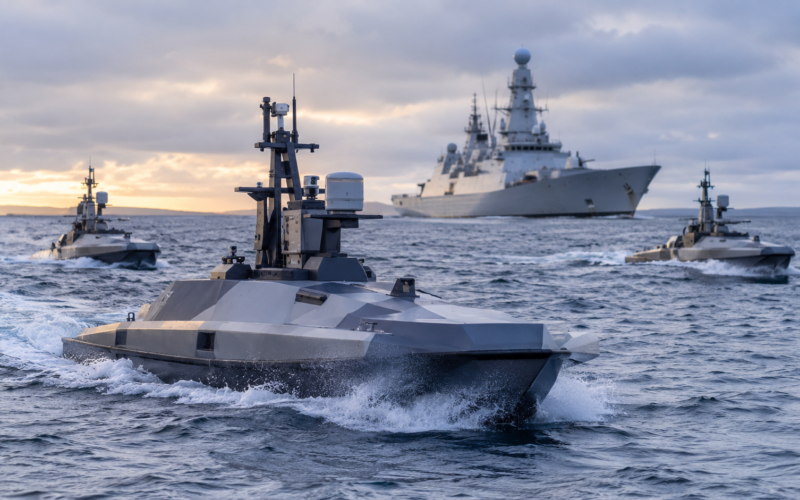
The Royal Navy announced on 9 November 2026 that it had established its first dedicated autonomous surface-vessel squadron, marking a shift from testing uncrewed boats to building a permanent organisation for their operational use. The 1st Autonomous Squadron was formally commissioned on 5 November at HM Naval Base Portsmouth.
Key Takeaways
- The new 1st Autonomous Squadron comprises approximately 180 personnel based in Portsmouth.
- Kraken K3 Scout and Rattler unmanned surface vessels were demonstrated from a shore control hub.
- The squadron replaces Project Beehive, the Navy’s earlier experimental programme for crewless boats.
- The Royal Navy intends to use uncrewed vessels independently and alongside crewed ships and allied forces.
Royal Navy Creates Permanent Uncrewed Boat Unit
According to the Royal Navy’s official announcement, the squadron’s personnel are organised into two watches to support continuous operations. At the commissioning event, Kraken and Rattler vessels manoeuvred around Portsmouth Harbour under remote control from a control hub. The demonstration establishes that the platforms were operated at the ceremony; it does not by itself prove fully autonomous navigation or combat readiness.
The unit succeeds Project Beehive, which had served as a testbed for purchasing and operating crewless vessels. The new squadron will focus on operating current platforms, refining tactics and introducing additional uncrewed boats as capabilities mature.
How Kraken and Rattler Fit the Hybrid Navy
The Navy wants to integrate unmanned surface vessels into task groups that also contain conventional warships. The planned roles and operating procedures will develop as the service tests how crewed and uncrewed vessels can coordinate safely and effectively. The announcement did not specify a complete future fleet size or a schedule for sustained combat deployment.
Why the Squadron Matters
Establishing a dedicated unit addresses challenges beyond the vessels themselves: training crews, managing maintenance, developing command arrangements and learning how to operate multiple systems in contested waters. The Royal Navy says its wider hybrid-navy programme is supported by £1.5 billion of investment over four years, but that figure is not a budget assigned solely to this squadron.
What Happens Next?
The squadron will work with the Navy’s Capability Accelerator and other development organisations to introduce further platforms. Future milestones to watch include documented deployments, exercises with allied task groups and independently assessed performance in demanding maritime conditions.
DroneUnzip Analysis
The significance lies in the organisational transition from experimentation to a standing unit. If the approach proves effective, demand could grow for interoperable vessel control software, communications, remote maintenance and autonomous navigation. Those are potential industry implications rather than announced contracts.
