

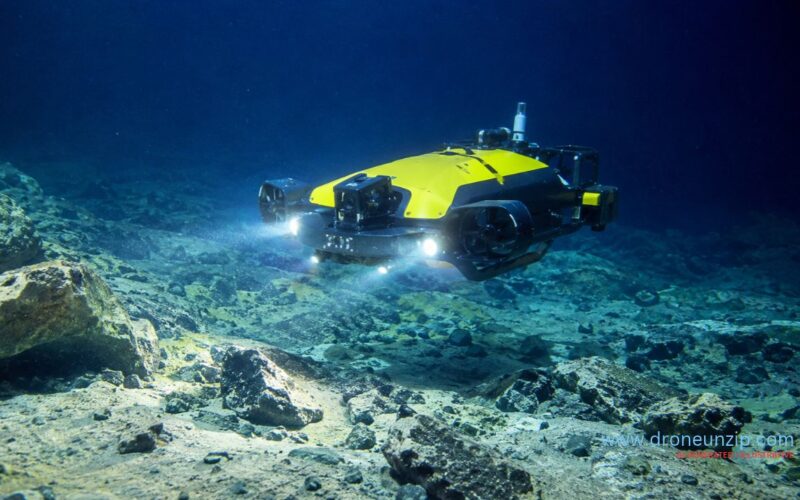
US underwater robotics company Impossible Metals announced on 9 November 2026 that its Eureka autonomous collection system had retrieved approximately 450 grams of polymetallic nodules from the seafloor at a depth exceeding 4,000 metres during a September scientific expedition. The company says the robot navigated to the seabed, selected material using a robotic claw and returned to the surface.
Key Takeaways
- Impossible Metals reported a deep-ocean collection test at more than 4,000 metres.
- The Eureka system retrieved about 450 grams of polymetallic nodules for scientific study.
- The company says its AI-enabled perception system is designed to avoid nodules supporting visible marine life.
- Environmental advantages, industrial scalability and commercial mining approval remain unproven.
What Happened During the Pacific Test?
Reuters reported that the company carried out the experiment in September and announced the results on 9 November. The robot descended to the seafloor, used its claw to recover a small sample of mineral-rich nodules and returned to the surface. Polymetallic nodules can contain metals such as nickel, cobalt and copper. The sample was intended for research rather than commercial extraction.
Impossible Metals identifies the test area as the Clarion-Clipperton Zone in the Pacific. Its announcement says Viridian Biometals will use the recovered material to investigate bacterial populations associated with the nodules.
How the Eureka Robot Works
Unlike collection concepts that use large seabed vehicles and suction systems, Eureka is designed to hover above the seabed and use a manipulator to select individual nodules. The company says onboard perception software can identify visible organisms and leave occupied nodules undisturbed. A buoyancy-based lifting approach is intended to reduce dependence on conventional riser-pipe infrastructure.
These descriptions explain the manufacturer’s design claims. They do not establish that the approach has no ecological impact, particularly at industrial scale.
Why the Demonstration Matters
Operating robotic manipulators at more than four kilometres underwater combines difficult engineering requirements: high-pressure hardware, navigation, object recognition, precise grasping and recovery. A completed collection-and-return sequence would be a meaningful technical step, but the 450-gram sample is far below the quantities required for commercial mining.
Environmental and Regulatory Questions
Deep-sea mining remains controversial because of possible harm to habitats and ecosystems that are not yet fully understood. Impossible Metals argues selective collection could reduce disturbance, but independent monitoring data and comparative environmental assessments are essential before such claims can be accepted. Commercial operations would also require relevant regulatory authorisation.
What Comes Next?
The company plans to use the trial results to develop a larger robot and says an expanded Eureka III system will be evaluated during an independent scientific programme in 2027. Important milestones include publication of dive data, environmental impact findings, retrieval rates and regulatory decisions.
DroneUnzip Analysis
The story illustrates how autonomy is moving from mapping the ocean to physically interacting with objects on the seabed. The potential applications extend beyond mineral collection to underwater inspection and sampling. However, whether this particular method is environmentally acceptable or economically viable is unresolved.
Sources
Reuters report; Industrial Equipment News: Eureka system details.
