

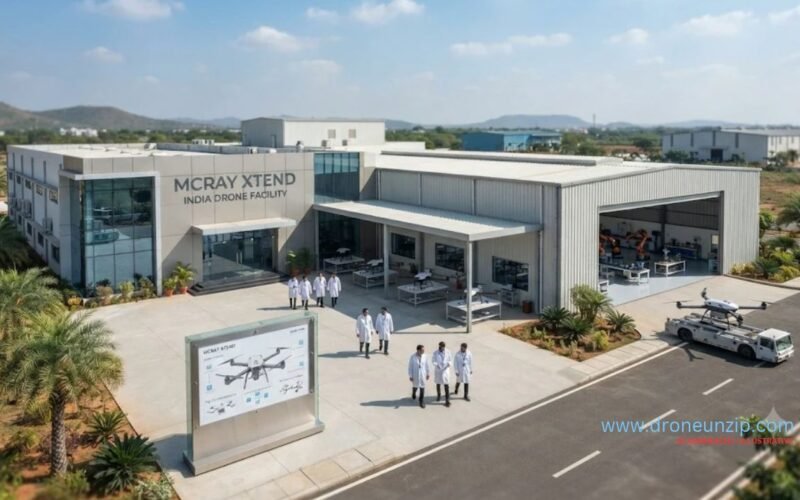
Hyderabad-based Magellanic Cloud has said premises for the MCRAY XTEND India joint venture’s planned tactical-drone manufacturing and testing facility are ready, marking a preparatory milestone for a venture combining Indian industrial operations with overseas unmanned-systems technology.
Key takeaways
- The company disclosed the update in a 3 November 2026 stock-exchange filing. The joint venture involves Rayonix Tech and collaboration with Israel’s XTEND, whose XOS platform is designed to support operator-controlled autonomous missions.
- Facility readiness is not the same as an operational production line. The company describes a phased programme involving manufacturing, assembly, testing and integration. The filing does not establish completed deliveries, an order book for the new facility or the date of sustained commercial production.
What happened
The company disclosed the update in a 3 November 2026 stock-exchange filing. The joint venture involves Rayonix Tech and collaboration with Israel’s XTEND, whose XOS platform is designed to support operator-controlled autonomous missions.
Facility readiness is not the same as an operational production line. The company describes a phased programme involving manufacturing, assembly, testing and integration. The filing does not establish completed deliveries, an order book for the new facility or the date of sustained commercial production.
Technical and operational context
The proposed local integration effort could address Indian demand for mission-specific tactical UAVs, including training, repair and systems adaptation. However, the exact share of locally manufactured components, intellectual-property arrangements and regulatory approvals need further disclosure.
India’s defence-drone market increasingly places importance on domestic production capacity and support after delivery. The potential significance is therefore not only airframe assembly but access to software integration, spares and field support.
Why it matters and what comes next
Industry observers should watch for the first documented manufacturing run, formal certifications, production capacity figures and customer orders. Those milestones would provide stronger evidence of industrial progress than premises readiness alone.
