

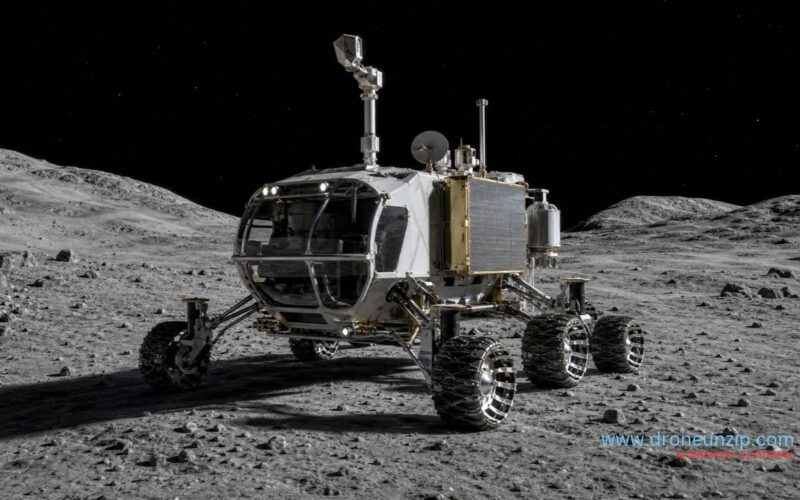
NASA announced on 7 November 2026 that it is moving forward with PROMISE, a nuclear-powered robotic rover designed to explore the Moon’s South Pole. The agency is targeting a launch in late 2028 and an approximately 18-month mission, with advanced autonomy and radiation-tolerant computing among the technologies to be demonstrated.
Key Takeaways
- PROMISE stands for Polar Rover for Observation, Mapping, and In-Situ Exploration.
- The six-wheeled rover is intended to survey lunar terrain and subsurface resources.
- NASA plans to reuse selected hardware and engineering components from Mars rover programmes.
- The rover will demonstrate advanced autonomy sensors, algorithms and High Performance Spaceflight Computing.
- The mission is planned; the rover has not yet operated on the Moon.
What NASA Announced
NASA said the Jet Propulsion Laboratory will manage PROMISE and build the rover using a combination of spare flight components and engineering test hardware developed for the Curiosity and Perseverance Mars rover programmes. The agency says this approach can reduce development cost and shorten integration and testing.
The rover is intended to collect information that will help assess possible landing sites, local resources and infrastructure needs for future operations near the lunar South Pole.
Why Nuclear Power Matters at the Lunar South Pole
Some south-polar locations experience extended darkness, while permanently shadowed regions are of interest because they may preserve water ice. NASA says the nuclear-powered design will allow PROMISE to work through long lunar nights and in regions where sunlight is unavailable. The ability to continue operating in darkness would be important for sustained robotic surveying.
Science Payload and Autonomous Technology
PROMISE will carry a drill intended to sample material from approximately one metre below the surface, spectrometers to analyse composition, temperature and radiation sensors, and visible-light cameras. NASA also plans to demonstrate its High Performance Spaceflight Computing system alongside advanced autonomy sensors and algorithms.
These technologies could help the rover interpret its surroundings and navigate difficult terrain, but NASA has not yet demonstrated the complete system on the lunar surface.
Launch Plan and Delivery Contract
NASA awarded Blue Origin a $94 million base contract, with a performance-dependent option worth an additional $140 million, to deliver PROMISE to the lunar South Pole. The agency is targeting late 2028 for launch and plans an 18-month rover mission. These dates remain programme targets rather than completed milestones.
Why It Matters for Autonomous Space Systems
PROMISE connects resource prospecting with the development of more capable autonomous planetary vehicles. If the computing and navigation demonstrations succeed, they could inform future robotic missions operating far from direct human supervision. That is a potential technology implication, not a demonstrated mission result.
Sources
NASA official mission announcement; NASA PROMISE mission page; NASA JPL announcement.
