

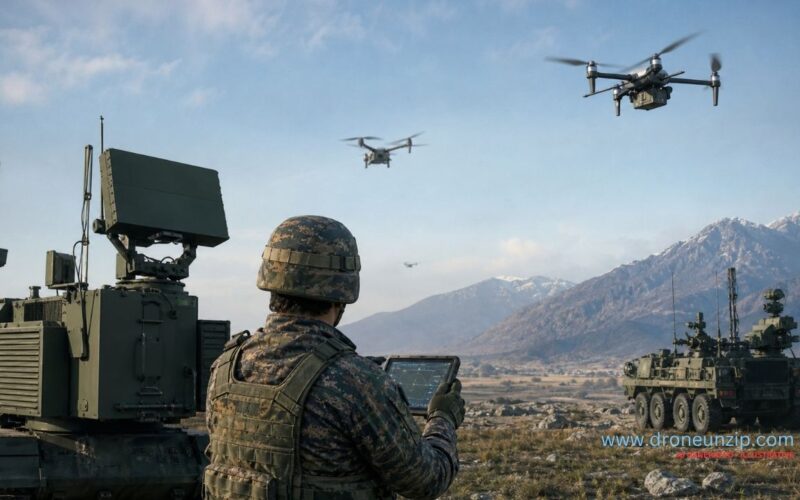
India’s Defence Acquisition Council has given in-principle clearance to defence procurement proposals valued at approximately ₹2.12 lakh crore, with the Army’s list including surveillance drones, long-range loitering munitions and platform-based counter-unmanned aircraft systems. The 26 October decision marks an administrative step towards potential purchases, not the award of contracts.
Key Takeaways
- The Defence Acquisition Council approved Acceptance of Necessity for proposals worth about ₹2,12,000 crore on 26 October 2026.
- Army requirements include surveillance UAVs, long-range unmanned systems, integrated surveillance-and-strike systems, loitering munitions and platform-based counter-UAS.
- The Defence Ministry says approximately 82% of the proposed procurement value is intended for Indian industry.
- Supplier names, individual order values and delivery schedules have not been announced.
Who Approved the New Unmanned-Systems Proposals?
The Defence Acquisition Council, chaired by Defence Minister Rajnath Singh, granted Acceptance of Necessity (AoN) to capital acquisition proposals from the armed forces. The Ministry of Defence announced the decision through the Press Information Bureau on 26 October. AoN signals approval of the requirement and enables further acquisition steps; it is not the same as a signed purchase order.
What Drone and Counter-Drone Equipment Is on the Army’s List?
The Army’s approved requirements include a Platform Based Counter Unmanned Aerial System, an Unmanned Aerial System Brick Long Range, surveillance UAVs, an Integrated Surveillance and Strike System and a Long Range Kamikaze Drone System. The wider package also includes vehicles, artillery, helicopters and air-defence equipment, so the entire ₹2.12 lakh crore figure must not be described as drone-only spending.
When and Where Was the Decision Announced?
The Defence Ministry issued its statement in New Delhi on 26 October 2026. The release does not assign the unmanned-system proposals to particular military formations or identify their eventual deployment locations.
Why the Procurement Mix Matters for India’s Drone Industry
The combined procurement list points to a broader defence ecosystem rather than a single aircraft programme. Surveillance platforms collect information, integrated strike systems seek to act on it, and counter-UAS equipment protects forces against hostile drones. India has already moved to strengthen this last capability through its ₹770 crore BEL radar agreement for detecting mini and micro drones. The latest approvals also complement the Indian Air Force’s indigenous unmanned-systems roadmap, reinforcing potential demand for Indian-developed sensors, navigation technology, communications equipment and systems integration. Surveillance platforms collect information; integrated strike systems seek to act on it; counter-UAS equipment protects forces from hostile drones. That creates potential demand for sensors, navigation, data links, software, launch equipment and systems integration. This is an industry implication, not confirmation that any particular company has secured an order.
What Happens Between Approval and Delivery?
Procurement proposals must proceed through further acquisition processes before contracts can be signed. The ministry did not disclose tender schedules, specifications or award dates. For Indian manufacturers, the decisive signals will be requests for proposals, qualification criteria, trial results and contract announcements. The ministry’s 82% indigenous-industry estimate applies to the total AoNs, not necessarily each drone programme.
Sources
