

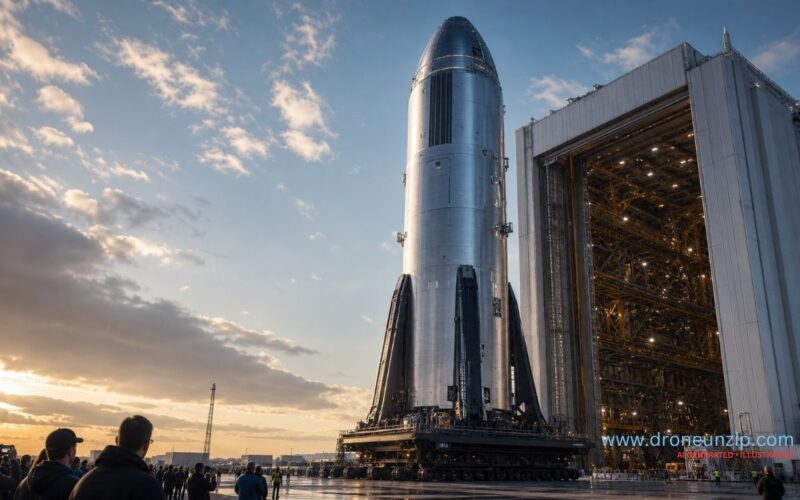
US space infrastructure startup Cowboy Space has unveiled Big Iron, a proposed launch vehicle whose upper stage would remain in orbit and operate as part of an AI computing constellation. The company is targeting a first flight in 2028, but neither the rocket nor its orbital data-centre concept has yet been demonstrated in space.
Key Takeaways
- Cowboy Space unveiled the Big Iron name and architecture on 26–27 October 2026.
- The proposed 86-metre rocket would use a reusable first stage and convert its upper stage into an orbital computing platform.
- The company proposes a constellation called Stampede and has filed plans for 20,000 satellites.
- The 2028 debut, orbital computing performance and commercial economics remain company targets.
Who Is Behind the Big Iron Rocket Project?
Cowboy Space is a US startup founded by Baiju Bhatt, a co-founder of Robinhood. The company previously operated as Aetherflux with a focus on space-based power before expanding its plans to include orbital data centres and dedicated launch infrastructure. Satellite industry publication Via Satellite reported the announcement on 27 October.
What Makes the Big Iron Architecture Different?
Rather than leaving the upper stage solely as spent launch hardware, Cowboy Space proposes converting it into a functioning computing satellite after deployment. Via Satellite reports that the vehicle is designed to be approximately 86 metres tall and deliver more than 15,000 kg to sun-synchronous orbit. The proposed deployed structure would measure roughly 132 by 73 metres and support five computing racks. These are design targets, not verified flight specifications.
When Could the Rocket Launch and Where Would It Operate?
The company is targeting a 2028 inaugural launch. Its proposed orbital infrastructure would operate in Earth orbit, with sun-synchronous orbit cited for the rocket’s payload capability. The company has not demonstrated the launch vehicle, and the announced timetable should be treated as aspirational until hardware testing and launch arrangements are independently documented.
Why Orbital Computing Is an Autonomy Story
Spacecraft that host computing infrastructure need power generation, thermal management, attitude control, fault detection and increasingly automated operations. Moving compute closer to satellites could eventually reduce dependence on ground links for some workloads, but Cowboy Space’s stated commercial model centres on data-centre services. Any claim that it will make space AI cheaper than terrestrial computing remains speculative until operating systems, economics and regulatory constraints are tested.
What Are the Biggest Technical and Commercial Obstacles?
The architecture combines the risk of developing a new rocket with the challenge of operating power-hungry computing hardware in orbit. Long-term sustainability also matters: the UK’s ClearSpace debris-removal mission illustrates a separate effort to address the growing challenge of objects left in orbit. Heat rejection, radiation tolerance, communications bandwidth, maintenance, orbital debris mitigation and launch reliability will determine feasibility. The company’s filing for a large constellation does not mean regulatory approval or deployment of those satellites.
Sources
