

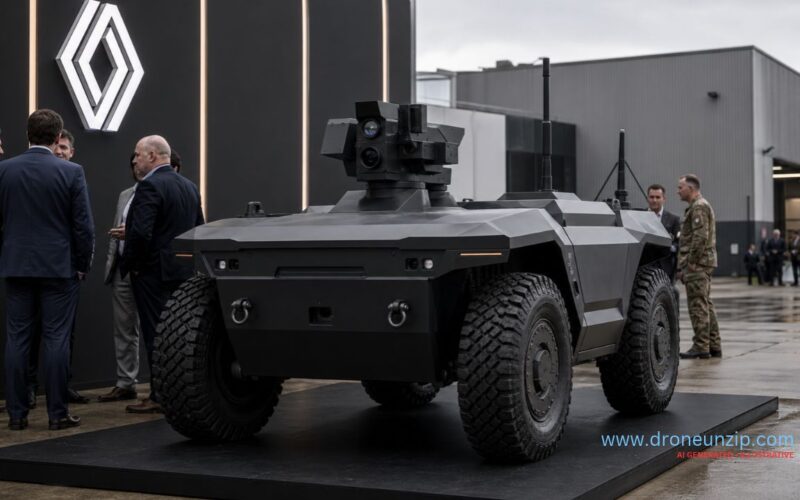
Renault Group and John Cockerill unveiled Forefront Concept on 3 November 2026, a modular, remotely operated electric ground vehicle intended for defence and civilian missions in hazardous terrain. The partners are combining automotive manufacturing expertise with remote-operation and autonomy systems, with field exercises and trials planned in the coming weeks.
Key Takeaways
- Forefront Concept uses four-wheel drive, four-wheel steering and two electric motors.
- The companies target approximately 400 kilometres of operating range and payloads up to one tonne.
- John Cockerill is developing teleoperation and scalable autonomy capabilities.
- The vehicle remains a concept undergoing further evaluation, not a confirmed mass-produced or deployed system.
What Renault and John Cockerill Announced
In their official announcement, the companies described Forefront as a versatile platform for logistics, intelligence gathering, counter-drone operations, fire support, evacuation and civilian emergency response. Its modular design is intended to support different equipment packages without developing an entirely new vehicle for each mission.
Renault developed the vehicle platform using established automotive components, electric powertrain technology and manufacturing methods designed to control costs. John Cockerill contributed the remote-operation architecture, autonomous-driving functions and defence mission-system integration.
Forefront’s Target Specifications
Renault lists four-wheel drive and steering, two electric motors, an approximately 400-kilometre target range with an option for extension, and a payload capacity of up to one tonne. These are company-stated design specifications, not independently verified performance results from operational trials.
How Autonomous Is the Vehicle?
The companies describe a remotely operated vehicle with autonomy functions designed to evolve toward fully autonomous operation. That distinction matters: the announcement does not establish that Forefront already performs all intended missions without human intervention. Planned exercises with input from French military users should provide more evidence about navigation, communications and performance in demanding environments.
Why the Automotive Connection Matters
Conventional vehicle manufacturers bring expertise in high-volume parts supply, electric drivetrains and repeatable industrial production. Applying those capabilities to unmanned ground systems could help reduce the complexity of building and supporting robotic fleets. Whether Forefront achieves those benefits will depend on field validation, production decisions and customer demand.
What Comes Next
The partners plan additional exercises and trials to refine the platform. Key questions include off-road performance under load, autonomy reliability, cost, manufacturing scale and whether military or civilian customers commit to procurement.
Sources
Renault Group official press release; Renault Group technology overview.
