

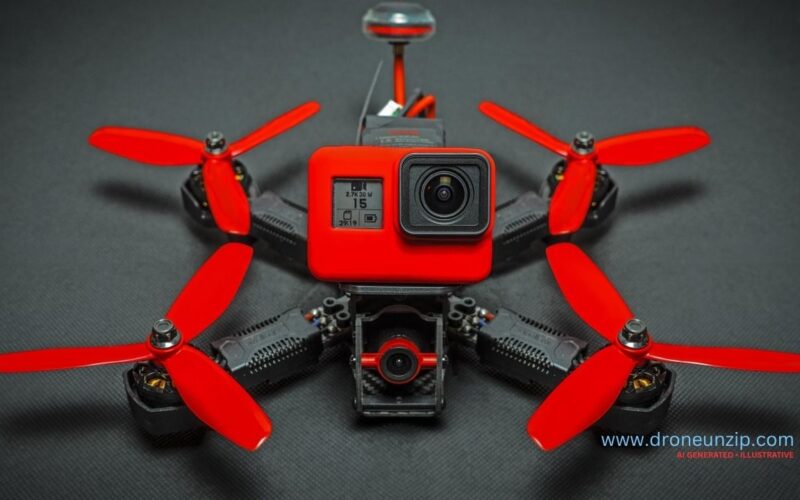
An FPV drone lets a pilot see the flight from the aircraft’s perspective through a live video feed, usually displayed on goggles or a screen. This first-person view makes FPV flying popular for racing, immersive aerial footage and precision manoeuvres. But choosing a setup involves more than buying a drone and goggles: pilots need compatible equipment, practice, a realistic budget and an understanding of the rules that apply where they fly.
What is an FPV drone?
FPV stands for first-person view. A camera on the aircraft sends live video to the pilot through a wireless video system. The feed may appear in dedicated FPV goggles or on a compatible display.
Many conventional camera drones prioritise automated flight assistance and stabilised footage. FPV aircraft often emphasise responsive manual control, agility and dynamic movement. Not every FPV drone is a racing machine, however: some are designed for cinematic filming or provide beginner-friendly flight modes.
A typical system includes the aircraft and flight controller, a camera and video transmitter, goggles or a display, and a radio controller. These parts must be compatible. Buying components separately without checking the video system and receiver can add unnecessary expense.
| FPV type | Best suited to | Main trade-off | Beginner note |
|---|---|---|---|
| Racing | Timed courses and speed | Fast, unforgiving handling and crash costs | Start with simulator practice and a controlled course |
| Freestyle | Acrobatic manoeuvres and creative flying | Frequent repairs may be part of learning | Prioritise a repairable frame and available spares |
| Cinematic | Dynamic moving shots | Camera payload adds cost, weight and complexity | Check whether the camera is included or bought separately |
| Small whoop / indoor-style | Low-speed practice in suitable enclosed spaces | Limited outdoor performance and wind tolerance | Often a less intimidating way to learn, but check local rules and safe indoor conditions |
| Ready-to-fly kit | People who want a matched package | Less freedom to mix components | Verify what the box includes and whether the system is upgradeable |
Types of FPV drones
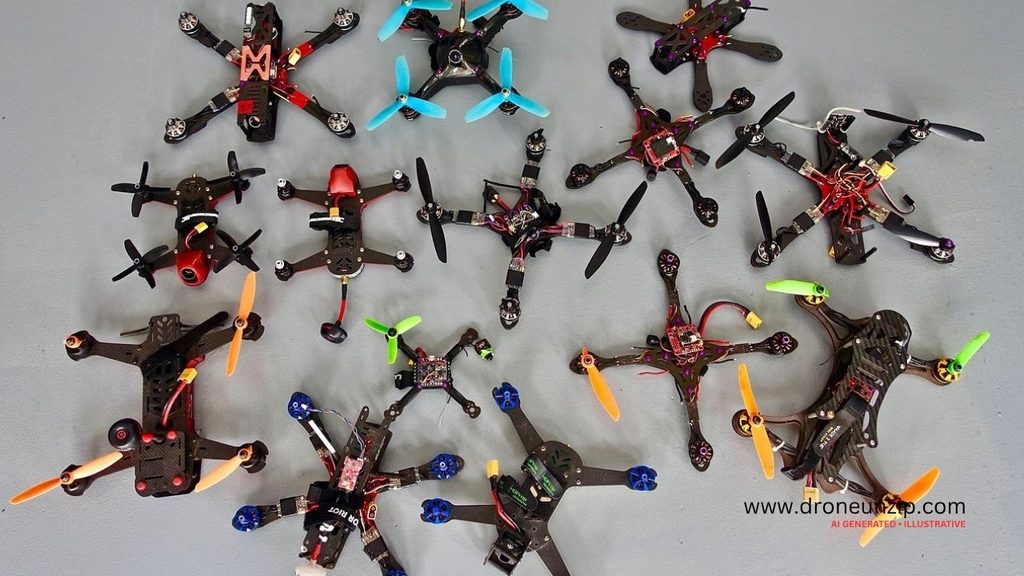
FPV racing drones
Racing drones are built for rapid acceleration, sharp turns and responsive handling on organised courses. Their speed is exciting, but they demand practice and an appropriate flying area. They are not necessarily the best choice for someone who mainly wants smooth travel footage.
Freestyle FPV drones
Freestyle aircraft are designed for controlled manoeuvres such as rolls and flips. Durability, repairability and predictable handling matter because crashes are a normal part of learning. Practise only in suitable, permitted locations away from people, roads and other hazards.
Cinematic FPV drones
Cinematic FPV setups capture dynamic movement through a scene. Depending on the aircraft, they may use an onboard FPV camera, a separate action camera or an integrated imaging system. Camera payload, mounts and batteries affect weight, flight time and handling. For conventional stable aerial photography, a camera drone with an integrated gimbal may be easier to operate. See our drone camera types and features guide for more on imaging choices.
Ready-to-fly versus build-it-yourself
A ready-to-fly package can simplify setup when the aircraft, controller and goggles are designed to work together. Building a system offers more control over components and repairs but requires technical knowledge. Beginners should compare the entire equipment ecosystem rather than the aircraft price alone.
How does an FPV drone work?
When the pilot moves a control stick, the radio controller sends commands to the aircraft. The flight controller processes the inputs and adjusts the motors. Meanwhile, the camera captures the forward view and a video link sends it to the pilot’s goggles or display.
The control link and video link perform different jobs. A clear picture does not necessarily mean the control link is reliable, and a strong control link does not guarantee an uninterrupted video feed. Range depends on the system, interference, antennas, environment and applicable restrictions.
FPV systems may use analogue or digital video. Analogue systems can appeal to pilots who value simple setups and particular signal characteristics, while digital systems can offer a sharper image. Compare latency, compatibility, repair costs and equipment already owned before choosing.
What equipment do you need?
- Aircraft: Check frame size, intended use, durability and replacement-part availability.
- Goggles or display: Confirm video-system compatibility, comfort and replacement cost.
- Radio controller: Check receiver compatibility and whether it can be used with a simulator.
- Batteries and charger: Confirm battery type, connectors and safe charging requirements. Our drone battery guide can help explain the basics.
- Spare propellers and tools: Propellers are consumable parts, and minor crashes may require repairs.
- Safety equipment: Use suitable battery storage and charging practices, and follow the manufacturer’s safety instructions.
Include the cost of damaged components and replacement parts in your budget. A cheaper aircraft can become expensive if parts are difficult to obtain.
How to choose your first FPV setup
Use this decision table before comparing specific models. It separates the flying goal from the equipment choice and helps avoid paying for capabilities you will not use.
| Your goal | Practical starting point | Check before buying |
|---|---|---|
| Learn the controls at the lowest risk | Radio controller plus a simulator | USB/controller support, simulator compatibility and whether the radio can later bind to your chosen receiver |
| Fly indoors or in a small controlled area | Small, guarded-propeller aircraft where appropriate | Noise, propeller guards, battery handling and a safe, permitted location |
| Race or fly freestyle outdoors | Repairable aircraft with a compatible radio and video ecosystem | Frame and motor spares, battery cost, charger, local flying site and recovery/failsafe behaviour |
| Capture cinematic footage | Purpose-built cinematic FPV system or an appropriate camera drone | Camera weight, stabilisation workflow, image quality, flight time and any extra camera purchase |
| Keep setup simple | Ready-to-fly package from a reputable seller | Exactly which goggles, controller, batteries, charger and accessories are included |
Compatibility rule: treat the control radio and video system as two separate compatibility checks. A controller that works with one receiver does not guarantee that the goggles will work with the drone’s video transmitter. Confirm the exact versions and regional model before paying.
How much does an FPV drone cost in India?
There is no single meaningful price for an FPV drone. A basic aircraft, a complete beginner package and a customised cinematic build can have very different total costs. Availability, import channels, compatibility and after-sales support can also affect the final amount.
Compare the complete setup: aircraft, goggles, controller, batteries, charger, spare parts and any separate camera. Ask sellers to confirm exactly what is included, warranty coverage and whether repairs and replacement parts are available in India. A global product listing or overseas price does not prove that a model is readily available or legally importable in India.
| Cost component | Why it matters | Question to ask the seller |
|---|---|---|
| Aircraft | Frame, motors, flight controller and video hardware may be sold together or separately | Is this a complete aircraft or a build that still needs parts? |
| Goggles / display | Can be a significant part of the system budget | Does it support this exact video system and firmware generation? |
| Radio controller and receiver | Must use compatible radio protocols | Is the receiver included, and is it bound/configured? |
| Batteries and charger | Extra packs affect total cost and session length | How many packs are included, and what charger is required? |
| Spare parts and tools | Crashes and wear can create ongoing costs | Are propellers, arms, motors and other common spares available locally? |
| Camera and accessories | Some cinematic setups need an additional camera or mount | Is the advertised camera included in the listed price? |
Are FPV drones legal in India?
FPV goggles do not exempt a pilot from applicable Indian drone rules. Requirements depend on the aircraft, its classification, the operation, the location and the rules in force at the time of flight. Do not assume that a recreational purpose or lightweight aircraft removes every requirement.
Start with the Ministry of Civil Aviation’s Drone Rules, 2021 and subsequent amendments, and check the Directorate General of Civil Aviation (DGCA) plus the government’s DigitalSky platform for current official information. DGCA guidance tells remote pilots to check airspace before every flight, keep the aircraft within visual line of sight, fly only in permitted zones unless the required permission is obtained, and maintain safe distance from people and property. Confirm which registration, certification and pilot requirements apply to your specific aircraft and operation.
An FPV video feed is not automatically a substitute for direct visual observation. Check the current visual-line-of-sight requirements and any conditions relevant to your operation. Before each flight, check the official airspace map and local restrictions, stay away from prohibited or restricted areas unless properly authorised, avoid people and traffic, and follow the manufacturer’s pre-flight procedures.
How should beginners learn to fly FPV?
A simulator is a practical first step. It lets beginners learn control inputs, orientation and recovery without risking a physical aircraft. DJI also provides official product and support resources; check the specific model’s guidance before choosing a training route.
Learn the aircraft’s operating modes and emergency procedures before taking off. Begin with basic manoeuvres in a suitable, permitted location, use conservative settings and seek experienced local guidance where possible. Avoid high-speed passes, flips or complex cinematic movements until you can manage the aircraft confidently.
Inspect the propellers, motors, frame, battery condition and connections before every flight. Understand the manufacturer’s recommended response to a weak video feed or control link before flying.
FPV drone versus a regular camera drone
A conventional camera drone is often the simpler choice for travel photography, landscapes and stable aerial video. Many models provide automated flight modes and integrated camera stabilisation. An FPV drone suits immersive piloting, agile manoeuvres and dynamic movement, but may require more practice, maintenance and repairs.
Neither type is universally better. Choose according to your intended use, skill level, total budget and the locations where you can legally and safely operate. If you are comparing consumer aircraft, our drone price guide for India may also help frame the wider buying decision.
Pre-flight checklist: do not skip these checks
- Airspace: Check DigitalSky and any current local restrictions immediately before the flight.
- Aircraft: Inspect frame, propellers, motors, fasteners and battery mounting.
- Power: Check battery condition, charge level, connector fit and charger/battery compatibility.
- Control and video: Confirm the correct model/profile, antenna connections, radio link and video feed before arming.
- Failsafe: Understand what the aircraft is configured to do if control signal is lost; do not assume the default is safe for your location.
- Flight area: Keep people, roads, animals and property clear of the operating area; use a competent observer where appropriate and consistent with the applicable rules.
- After landing: Disarm, disconnect the battery safely and inspect for damage before the next flight.
This checklist is a practical reminder, not a substitute for the aircraft manufacturer’s operating manual or applicable rules.
FAQs
Do FPV drones need goggles?
No. Goggles are common, but some systems can display the video feed on a compatible screen. The required equipment depends on the aircraft and video system.
Are FPV drones suitable for beginners?
They can be, provided beginners choose an appropriate setup, practise in a simulator, follow the manufacturer’s guidance and fly only in suitable locations. High-performance racing aircraft can be harder to learn than beginner-oriented systems.
Can I fly an FPV drone anywhere in India?
No. Airspace restrictions and applicable operating requirements still matter. Check official guidance and the intended location before each flight.
Is an FPV drone good for photography?
It can be useful for dynamic, immersive shots. For conventional stable aerial photography, a camera drone with an integrated gimbal may be easier to operate.
Should I build an FPV drone or buy a ready-to-fly kit?
A ready-to-fly package can simplify the first setup. Building one offers flexibility but requires technical knowledge and careful component selection. For a first system, prioritise compatibility, repair support and total cost.
Final thoughts
FPV flying combines piloting, video technology and hands-on equipment knowledge. The best first drone is not necessarily the fastest or most expensive. It is the system that fits your goals, has compatible equipment and replacement parts, and gives you room to learn safely.
Start with a simulator, understand the full equipment cost and check India’s current operating requirements before flying. Preparation matters more than a headline range or speed figure.
