

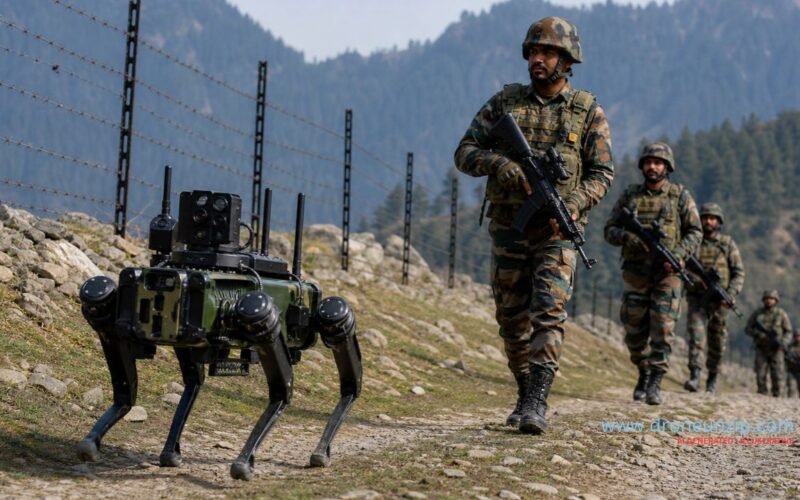
The Indian Army is expanding the use of four-legged robotic vehicles along sensitive stretches of the Line of Control and border areas in Jammu and Kashmir, according to a report published on 11 November. The machines, known as multi-utility legged equipment or MULEs, are being used for surveillance and logistical support in terrain that can be difficult for conventional wheeled vehicles.
What happened
The development is not the Army’s first introduction of robotic dogs. The Times of India reports that the Army received an initial batch of 100 MULE systems in June 2024 and has since deployed them in forward areas including Akhnoor and Rajouri. The latest reporting describes a wider operational presence, rather than a newly announced acquisition contract.
According to defence sources quoted by the newspaper, the robots carry observation equipment for monitoring activity and can transport supplies such as rations or ammunition. The report cites a payload range of about 12 to 15 kilograms, sensors including thermal imaging, and the ability to negotiate steep slopes. These specifications have not been independently verified for every deployed model.
Operational context and verification
The four-legged design offers an alternative to wheeled or tracked unmanned ground vehicles when patrol routes include rocks, stairs, snow and narrow paths. A robotic platform may also let personnel inspect an exposed area without immediately sending a soldier forward. The actual degree of autonomous navigation versus remote operation has not been established in the reporting.
India’s broader border-surveillance modernisation includes sensors, smart fencing and counter-drone measures. The robotic MULEs are one component of that layered system, not a substitute for human patrols or other surveillance assets.
Why it matters and what comes next
The emerging opportunity is for Indian manufacturers of legged platforms, electro-optical payloads, rugged batteries and secure communications. Long-term performance will depend on endurance, maintainability and reliable operation in extreme terrain. No new procurement quantity or independently measured field-performance results were confirmed in the sources reviewed.
For context, DroneUnzip has previously covered India’s earlier defence robotics developments and ground-robot interoperability trials.
